Managing an enterprise data center is a massive challenge. IT directors face constant pressure to keep systems running smoothly. You have racks filled with expensive equipment. Most enterprise environments use a mix of brands to get the best performance. You might rely on Dell for heavy compute tasks. You might use HPE arrays for secure data storage. You probably use Cisco switches to connect everything together across your network. This blended hardware environment is powerful but highly complex to manage. Here comes the multi vendor IT support handy and less invasive.

The biggest headache comes from maintenance contracts. Each manufacturer has different rules and regulations. Each hardware warranty expires on a different date. Keeping track of all these different agreements is basically a full-time job. When a critical failure happens in the data center, confusion often sets in. Your team wastes precious minutes figuring out who to call. You dig through digital files to check warranty status instead of fixing the broken server. There is a much better way to handle this chaos. You can consolidate your maintenance under one umbrella.
The Problem with Multiple OEM Contracts
Original equipment manufacturers build fantastic hardware. However, their primary goal is selling new hardware. Their maintenance contracts reflect this business model. During the first three years, the coverage is usually straightforward. But as the equipment ages, things change drastically. The manufacturers want you to enter a new buying cycle.
To encourage new purchases, manufacturers raise support prices significantly as equipment gets older. They also assign different expiration dates to different parts of your network. Your Dell servers might lose coverage in March. Likely, your Cisco network might lose coverage in November. Your IT staff has to track dozens of renewal dates. If you miss just one deadline, you could face a critical outage with absolutely no external help available. This fragmented approach drains your budget and exhausts your technical staff.
What to Do When Hardware Reaches End of Life
Every piece of enterprise hardware has a defined lifecycle. The original manufacturer sets a specific date when they stop offering standard warranties. This milestone is known as the end of life. Eventually, the equipment reaches an even more critical milestone. This final stage is the end of service life. At this point, the manufacturer stops offering support entirely. They will no longer fix it. They will no longer provide spare parts.
When you hit this wall, you might feel trapped. The manufacturer wants you to throw the old machines away and buy brand new equipment. But your servers and switches probably still work perfectly fine. So, what to do when hardware reaches end of life? You do not have to throw your reliable equipment away, instead you can switch to a completely different support model. Similarly, you can partner with an independent maintenance provider. This multi vendor IT support strategy keeps your equipment running smoothly without a forced hardware upgrade.
How to Extend Server Life After Warranty
Enterprise hardware is built incredibly well. A modern server can easily run without major issues for seven to ten years. The manufacturer warranty usually only lasts three to five years. If you want to know how to extend server life after warranty, the answer is independent maintenance.
Independent providers specialize in keeping older machines running. They do not manufacture new servers. Therefore, they have no reason to force you to buy anything new. They stockpile genuine spare parts in secure facilities. They hire experienced engineers who know exactly how to fix older systems. When your server breaks down, they fix it fast. You get to keep using your reliable equipment. You maximize your return on investment.
The Solution: Multi Vendor IT Support for Dell HPE and Cisco
Most enterprise data centers are wonderfully complex. You pick the absolute best equipment for each specific task. This often means buying from three or four different brands. Managing support contracts for all these different companies is a nightmare.
Using multi vendor support for Dell HPE Cisco solves this problem entirely. You sign one single contract. You get one phone number to call.
- If a Dell server drops a drive, you call that number.
- If an HPE storage array flashes a warning light, you call that exact same number.
- If a Cisco switch drops network packets, you call the same number again.
The support provider handles all the rest. This single point of contact saves your IT team hours of frustration. They no longer have to guess which vendor is responsible for a problem. They just make one call and get back to their important daily tasks.
Is Third-Party Maintenance Better Than OEM?
Many IT leaders ask if independent support is really reliable. They wonder, is third party maintenance better than OEM? The answer really depends on your specific goals. The original manufacturer is great for the very first few years. They provide the initial software updates and the early firmware patches.
But once the original warranty expires, their support becomes incredibly expensive. Independent maintenance focuses only on keeping your current hardware running properly. Their service level agreements are often much more flexible. Their field engineers are often faster to respond. For any hardware that is past its original warranty, independent support is almost always the superior choice.
Cost Comparison OEM vs Third-Party Support
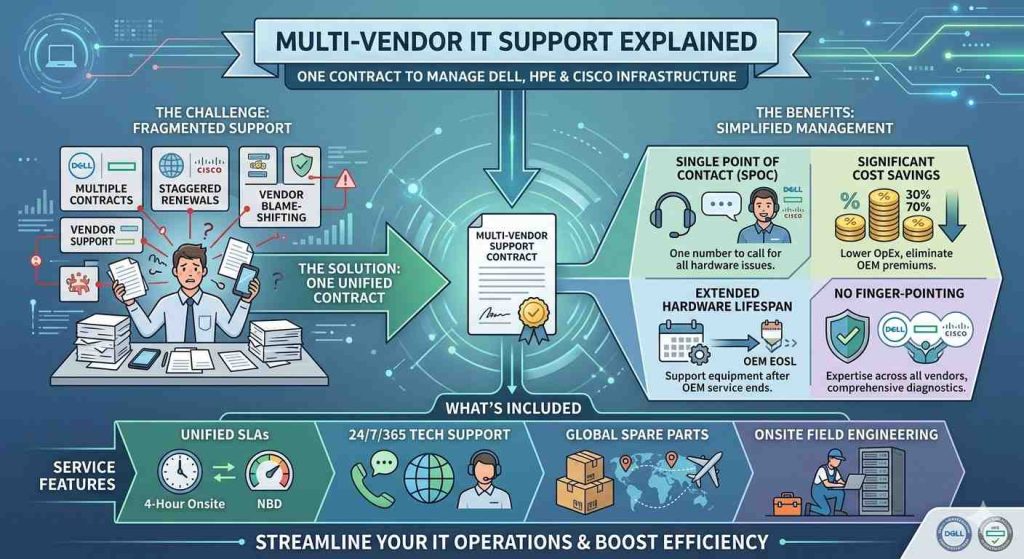
The financial benefits of switching to independent support are massive. Let us look at the actual numbers. Here is a clear cost comparison OEM vs third party support.
| Support Feature | Original Manufacturer | Independent Provider |
| Annual Maintenance Cost | High and rapidly increasing | 50 to 70 percent lower |
| Primary Business Goal | Selling brand new hardware | Extending hardware life |
| Contract Flexibility | Very rigid and strict | Highly customizable to your needs |
| Response Time Options | Limited standard options | Flexible four-hour onsite options |
| Multi-Brand Coverage | No | Yes |
As you can clearly see from the table, the financial savings are very significant. You can literally cut your annual maintenance budget in half and can utilise those saved funds for much more important technology projects. It is always smart to invest in better cybersecurity tools or faster cloud migration instead of paying inflated maintenance fees.
How to Reduce IT Maintenance Costs After EOSL
When the manufacturer announces the end of service life, many IT directors panic. You might think you have to buy new servers immediately to protect your data. Buying new servers requires a massive capital expense approval from the board.
If you want to know how to reduce IT maintenance costs after EOSL, you must look outside the manufacturer ecosystem. Independent support providers thrive on protecting older hardware. They secure genuine parts from global secondary markets. They maintain vast testing facilities to ensure every part works perfectly. Because they do not carry the massive overhead of a global hardware manufacturer, they pass massive savings directly to you. You get the exact same level of physical repair service for a tiny fraction of the price.
Enterprise Server Support After Warranty: What to Expect
Moving away from the original manufacturer can feel risky at first. You rely heavily on your servers to keep your business running every single day. You need to know that enterprise server support after warranty is reliable and safe. When you partner with a premium provider, you can expect truly excellent service.
Here is exactly what you get with a premium independent contract:
- Lightning Fast Response Times: You can choose premium contracts that guarantee a skilled technician arrives at your facility in under four hours.
- Local Parts Storage: Good providers keep spare parts in secure forward stocking locations very close to your data center.
- Expert Engineers: You get immediate access to highly skilled technicians who know your exact server models inside and out.
- Dedicated Account Managers: You get a single trusted person who understands your unique business needs and hardware history.
- Custom Service Levels: You can put mission-critical servers on a four-hour response plan and put backup servers on a next-day repair plan.
The transition process is smooth and incredibly secure. Your internal IT team will barely notice the change in providers. They will only notice that getting multi vendor IT support becomes much faster and significantly easier to manage.
The Green Benefit: Reducing Electronic Waste
Discarding perfectly good servers is terrible for the environment. Electronic waste is a massive global problem right now. Millions of tons of technology are thrown away every single year simply because a warranty has expired.
When you keep your hardware running longer, you directly reduce your carbon footprint. You prevent toxic heavy metals from entering local landfills. Sustainable IT management is becoming a major priority for large corporations across the globe. Using independent maintenance directly supports these important green initiatives. You help protect the planet while simultaneously protecting your budget.
How the Onboarding Process Works
Switching your entire data center to a new support model sounds complicated. However, the best providers make the process incredibly simple. A professional onboarding process usually follows three easy steps.
- The Complete Audit: The provider visits your site or uses discovery software to catalog every single piece of equipment you own. They check serial numbers and current warranty status.
- The Custom Proposal: The provider gives you a detailed list of what they can cover. You select the exact level of coverage you need for each specific machine.
- The Seamless Transition: The provider loads your equipment details into their ticketing system. They stock local parts for your specific machines. They take over the complete maintenance burden from that day forward.

Choosing the Best Partner for Your Business
The independent support market is growing very fast. There are many different options out there. You need to find the best third party IT support providers in US to protect your critical data center.
Additionaly, you should look for a company with a proven track record of success. Having a trusted team that deeply understands complex enterprise environments on your side can save your money in multiple ways. You want a provider that offers totally customizable contracts. You do not want a rigid approach that forces you to pay for services you do not actually need.
Extended Technical Solutions offers exactly this kind of premium multi vendor IT support service. We specialize in enterprise IT management. and can help you simplify your daily operations. ETS helps you cut your maintenance costs dramatically without sacrificing any quality.
Take Control of Your Data Center Today
Managing an enterprise data center does not have to be a daily nightmare. You absolutely do not have to juggle a dozen different support contracts from a dozen different companies. Plus, you do not have to accept massive price increases just because your perfectly good hardware reached the end of its original warranty.
You have the power to take control of your IT budget right now. By choosing a unified support contract, you simplify your daily operations instantly. You give your IT staff their valuable time back. They can stop tracking expiring contracts and start focusing on innovation.
Extended Technical Solutions is ready to help you optimize your entire data center. We have the expert engineers and the global parts network required to keep your business running. Contact our team today to build a custom support plan for your Dell, HPE and Cisco infrastructure. Let us help you maximize the true value of your hardware with premium multi vendor IT support.
About The Author: