Network downtime prevention starts with proactive monitoring, regular IT network maintenance, redundancy planning, and real-time alerts. Businesses can reduce network downtime by identifying vulnerabilities early, upgrading aging infrastructure, and implementing enterprise-grade network resilience strategies that improve uptime, security, and operational continuity.
Introduction
Enterprise network downtime is no longer just an IT inconvenience, it is a direct business risk. From interrupted operations and lost revenue to cybersecurity vulnerabilities and damaged customer trust, even a short outage can create major consequences for modern organizations.
According to IBM’s Cost of a Data Breach Report, downtime and infrastructure failures continue to be among the leading causes of operational disruption for enterprises. As businesses increasingly depend on cloud applications, remote teams, and real-time connectivity, enterprise network reliability has become essential for business continuity.
Companies like Extended Tech Solutions are helping enterprises reduce these risks through proactive infrastructure support, network monitoring, and third-party maintenance services designed to improve uptime and long-term IT performance.
The good news is that many outages are preventable. With proactive network management, predictive maintenance, network infrastructure monitoring, and proper support services, organizations can significantly reduce network downtime and maintain stable performance across their IT environments.

Key Takeaways
- Enterprise network downtime can lead to revenue loss, productivity issues, and security risks.
- Proactive network monitoring helps identify issues before they escalate.
- Redundancy solutions improve fault tolerance and business continuity.
- Predictive maintenance reduces unexpected hardware failures.
- Real-time network alerts improve response time during outages.
- Managed network support services help enterprises maintain long-term network reliability.
Why Enterprise Network Downtime Happens
Before businesses can prevent network outages, they must understand the most common causes behind them.
Common Causes of Enterprise Network Downtime
| Cause | Impact on Business |
| Aging network hardware | Increased hardware failures and instability |
| Human configuration errors | Misconfigured devices causing outages |
| Cybersecurity attacks | Network disruptions and data breaches |
| Lack of monitoring | Delayed detection of performance issues |
| Power failures | Interrupted connectivity and operations |
| Single points of failure | Entire systems becoming unavailable |
| Poor maintenance practices | Gradual performance degradation |
Many enterprises continue using outdated networking equipment long after vendor support expires. This increases the likelihood of unexpected failures and makes troubleshooting more difficult.
Explore third-party maintenance solutions for network equipment.
The Real Cost of Network Downtime
Downtime costs vary depending on industry and company size, but for enterprises, even a few minutes of disruption can result in:
- Lost customer transactions
- Interrupted employee productivity
- Delayed communication
- Compliance risks
- Damage to brand reputation
For industries such as healthcare, finance, logistics, and eCommerce, continuous network uptime is critical to daily operations.
Best Practices for Network Downtime Prevention
Implement Proactive Network Monitoring
One of the most effective network outage prevention strategies is continuous network performance monitoring.
Modern monitoring tools provide:
- Real-time network alerts
- Traffic visibility
- Bandwidth usage insights
- Device health monitoring
- Early detection of bottlenecks
Proactive network management allows IT teams to identify unusual behavior before it turns into a major outage.
Attention:
Reactive IT support often increases downtime because issues are only addressed after users report them. Enterprises should prioritize preventive monitoring instead of waiting for failures to occur.
Use Network Redundancy Solutions
A single point of failure can bring down an entire network environment. Redundancy solutions help enterprises maintain connectivity even if one component fails.
Common Redundancy Strategies
| Redundancy Type | Purpose |
| Backup internet connections | Maintain connectivity during ISP failures |
| Redundant switches and routers | Prevent hardware-related outages |
| Failover servers | Ensure application availability |
| Power backups and UPS systems | Minimize disruptions during power loss |
High availability network systems are essential for organizations that require uninterrupted operations.
Prioritize Predictive Network Maintenance
Predictive maintenance uses analytics, monitoring tools, and performance trends to identify potential failures before they happen.
Instead of replacing equipment only after it breaks, businesses can:
- Monitor hardware lifespan
- Track error rates
- Analyze device temperatures
- Detect abnormal traffic behavior
This approach reduces emergency downtime and improves enterprise IT infrastructure stability.
Strengthen Network Security Monitoring
Cybersecurity threats are now a leading cause of enterprise network downtime.
Ransomware attacks, DDoS attacks, and unauthorized access attempts can quickly disrupt business operations.
Network Security Best Practices
- Enable firewall monitoring
- Use intrusion detection systems
- Segment critical network environments
- Perform regular firmware updates
- Conduct vulnerability assessments
According to the Cybersecurity & Infrastructure Security Agency (CISA), proactive cybersecurity monitoring is essential for maintaining operational resilience in enterprise environments.
Create a Disaster Recovery and Business Continuity Plan
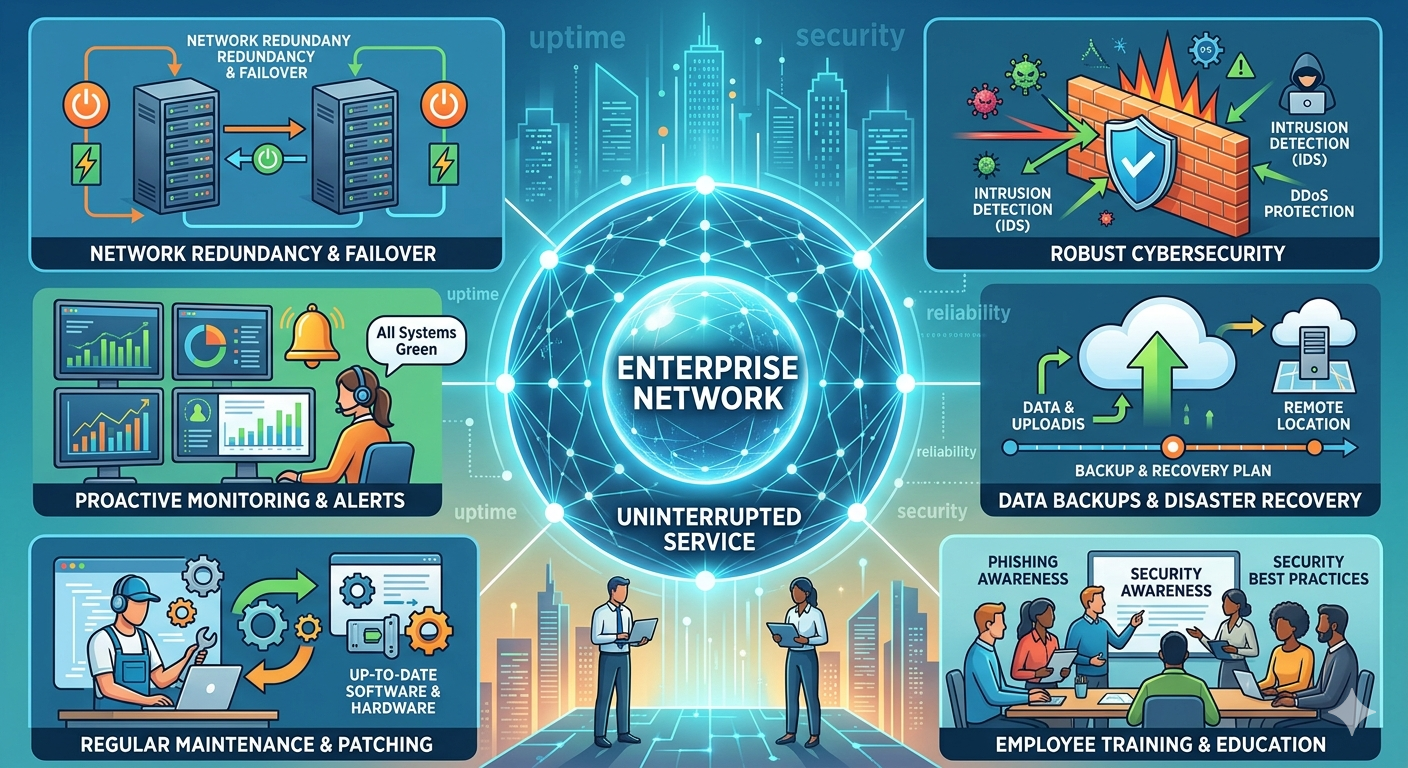
Even with strong prevention measures, unexpected outages can still happen. A disaster recovery plan helps organizations recover quickly while minimizing operational disruption.
A Strong Recovery Plan Should Include
- Backup network configurations
- Data recovery procedures
- Emergency communication protocols
- Recovery time objectives (RTOs)
- Failover testing schedules
Businesses that regularly test their disaster recovery planning strategies recover significantly faster than organizations without documented recovery procedures.
The Role of Network Equipment Support Services
Enterprise networks require ongoing support, maintenance, troubleshooting, and optimization.
This is where network equipment support services become valuable.
Benefits of Professional Network Support Services
1. Faster Issue Resolution
Experienced support teams can quickly identify root causes and minimize downtime duration.
2. Extended Hardware Lifespan
Third-party maintenance and support services help businesses maximize existing infrastructure investments.
3. Improved Network Reliability
Continuous monitoring and preventive maintenance improve long-term stability.
4. Reduced IT Costs
Organizations can avoid unnecessary hardware replacement expenses while maintaining performance.
5. Better Scalability
Support providers help enterprises adapt infrastructure to evolving business requirements.
For businesses managing multi-vendor environments, reliable support services can simplify operations and reduce network management complexity.
How Businesses Can Improve Enterprise Network Uptime
Conduct Regular Network Audits
Routine assessments help identify vulnerabilities, outdated hardware, and performance gaps.
Standardize Network Configurations
Consistent configurations reduce human errors and simplify troubleshooting.
Train IT Teams Regularly
Technology evolves rapidly, and ongoing training improves incident response capabilities.
Monitor Vendor End-of-Life Dates
Unsupported hardware increases security risks and downtime probability.
Use Real-Time Network Alerts
Instant notifications reduce response times during outages.
Learn more about enterprise IT infrastructure support
Conclusion
Enterprise network downtime can disrupt operations, reduce productivity, and create major financial losses. However, businesses that invest in proactive network management, predictive maintenance, redundancy solutions, and professional support services can significantly reduce downtime risks.
Modern enterprises need more than reactive troubleshooting, they need long-term network resilience strategies that support business continuity and operational stability.
At Extended Tech Solutions, we help organizations improve enterprise network reliability through proactive support, infrastructure optimization, and tailored maintenance solutions designed for modern IT environments.
If your business wants to reduce network downtime and improve infrastructure performance, connect with our team today to explore customized network equipment support services.
FAQs
What is network downtime prevention?
Network downtime prevention refers to strategies and technologies used to minimize network outages and maintain continuous connectivity for enterprise operations.
What causes enterprise network downtime?
Common causes include aging hardware, cybersecurity attacks, configuration errors, insufficient monitoring, power failures, and lack of maintenance.
How can businesses reduce network downtime?
Businesses can reduce network downtime through proactive monitoring, redundancy solutions, predictive maintenance, disaster recovery planning, and professional network support services.
Why is proactive network monitoring important?
Proactive monitoring helps IT teams identify issues early, reducing the risk of unexpected outages and improving overall network performance.
What are network redundancy solutions?
Network redundancy solutions use backup systems, failover devices, and duplicate connectivity paths to maintain uptime during hardware or connectivity failures.
How do managed network services improve uptime?
Managed network services provide continuous monitoring, maintenance, troubleshooting, and optimization to improve enterprise network reliability and reduce operational disruptions.
About The Author: